We’ve seen that tidying up our neighborhoods can make them safer. That’s why, from June to October 2024, the Safe Steps Northwest initiative will provide weekly block cleaning services to 335 residential blocks in Germantown and Mt. Airy, which have recently been affected by gun violence.
We’re excited to begin work with Reverend W. Douglas Banks, who will lead the project rollout! Stay tuned for cleaning crew job openings and collaboration opportunities.
Senator Art Haywood taking part in a block cleaning. March 26, 2024 Photo courtesy of James Robinson | Pennsylvania Senate Democratic Caucus.
This initiative is made possible by funding from the Pennsylvania Commission on Crime and Delinquency’s 2022 Violence Intervention and Prevention Grant Program. It is a joint effort involving Mount Airy CDC, the litter cleaning service Glitter, State Senator Art Haywood, and Germantown United CDC. We are honored to serve as project advisors and support community engagement efforts in our area.
And, check out this recent article in the Philadelphia Inquirer to learn more about the research behind this community clean-up approach to reducing gun violence.
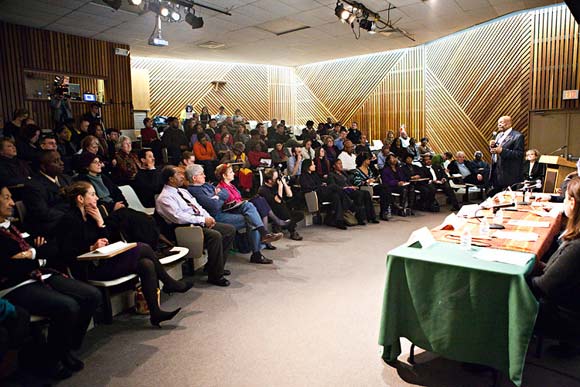
State Senator Art Haywood spoke at the project’s launch at Waterview Recreation Center along with Mt. Airy CDC Executive Director Philip Dawson, Germantown United CDC Executive Director Emaleigh Doley, an officer of the 14th District, a Germantown resident, and representatives from Glitter, including Program Manager Douglas Banks. Photo Courtesy of Mt. Airy CDC.
Listen to Germantown United CDC’s Matthew George’s interview on Iron Sharpens Iron, a podcast where veteran community organizers interview Philadelphians organizing for change in their neighborhoods. Stream the story below.
Matthew is the Business Development Manager at GU and founder of the inspiring grassroots initiative I Love Thy Hood. In this mini episode, he discusses his goal to clean up his corridor in Germantown and all that he has done so far to make it happen.
Iron Sharpens Iron is available on Spotify, Apple Music, Google Podcasts, Anchor, and other major podcast platforms. In each episode, hosts Leon Robinson and De’Wayne Drummond interview grassroots organizers. You’ll hear what they’re doing to change the status quo and what they’ve learned in the process. The show is produced by the Philadelphia Association of Community Development Corporations (PACDC).
For some Philadelphians, gentrification is a dirty word or — at the very least — an eyebrow raiser.
As they watch their namesake neighborhood creep towards becoming a “choice” spot for newcomers, the folks over at Germantown United CDC decided they want to help prepare residents for change.
Event specifics
On Saturday, GUCDC will host a free, all-day community forum on gentrification inside Mastery Charter’s Pickett Campus, 5700 Wayne Ave.
“The Big G” will run from 9 a.m. to 4 p.m.
“It’s the elephant in the room,” said board member Yvonne Haskins of gentrification. “It’s something that we need to talk about and figure out if there are ways to manage it.”
Preserving affordability and protecting homeowners and renters from potential bumps in real-estate prices will be a major focus of the forum.
The speakers
Weighing in on those topics and more will be Colvin W. Grannum (president and CEO of Bedford Stuyvesant Restoration Corporation), Nora Lichtash, (executive director of the Women’s Community Revitalization Project), Steve Mullin(president of Consult Solutions) and Betty Turner (co-founder of Germantown Community Connection).
In the morning, Alan Greenberger, the city’s deputy mayor for economic development, will moderate a roundtable “Meet the Press” style discussion.
After lunch, participants will break into four groups that will each tackle a different topic connected to gentrification with an eye on possible solutions. Each workshop will be led by one of the four panelists.
Financial literacy, affordable housing and the impact of the city’s new Land Bankwill be among the subjects up for debate.
Participants will end the day by coming together to hear about each workshop’s discoveries.
“We feel the winds of change from the energy that people are showing in their attention to all of these various projects in the community,” said Haskins. “Sooner or later, Germantown is going to be a choice neighborhood. It’s going to be a neighborhood that people want to live in more and more.”
And then there was one! Among 16 Philadelphia neighborhoods, Germantown has been crowned the Best Neighborhood of the Year by Curbed readers.
We’re a little verklempt.
Congratulations, people of Germantown! You’ve got grit, determination, and awe-inspiring character and community spirit, not to mention countless neighborhood treasures. Go, Germantown!
The historic neighborhood of Germantown has come a long way in its long history. It’s one of Philly’s oldest neighborhoods, and its historically significant sites dating back to the American Revolutionary War are neighbors to Germantown’s mom and pop shops and newer retailers and restaurants. The historic neighborhood in Northwest Philly has also seen an interest in revitalization, with programs like JumpStart Germantown launching to help first-time developers work on smaller rehab projects throughout the area, while the community recently rallied to win grant money to restore its African American landmarks located along the Germantown Avenue corridor. Even bigger changes are afoot with the redevelopment of nearly a dozen properties around the Wayne Junction station.
Curbed Philadelphia
The final round of this competition was a real barn burner. A tip of the hat to the folks in Mt. Airy for the friendly fight, especially Mt. Airy CDC, West Mt. Airy Neighbors (WMAN), and East Mt. Airy Neighbors (EMAN). We love our Northwest neighbors, and look forward to your continued partnership in 2018 and beyond. Read the full story >>
“This is Germantown Heart & Soul” Winter Community Gatherings
Ask Residents to Guide Neighborhood Development in Northwest Philadelphia
Through Creative Participatory Planning Process, beginning November 19th
Germantown, Philadelphia, PA – This is Germantown Heart & Soul, a project of Germantown United Community Development Corporation (GUCDC) and Just Act, will host a series of community gatherings throughout Northwest Philadelphia’s Germantown neighborhood this winter beginning on November 19, 2016. The Germantown community is invited to participate in a unique interactive group storytelling experience. Unlike traditional civic meetings and town halls, the events – called Story Circles – use theater as a planning tool and center on capturing the wishes, needs, and ideas of residents as they share personal stories of meaningful experiences in Germantown and what they view as essential for growth of the neighborhood’s vibrant but struggling shopping district. A calendar of events is included below, with additional dates to be announced.
Story Circles will be facilitated by a multigenerational “Storytelling Engagement Team” comprised of Germantown residents, with support from the Just Act Ensemble. The collected stories will guide Germantown United CDC’s future work and plans for successful, community-responsive business corridor revitalization and contribute to efforts underway to make the central business district a people-centered main street destination for the Germantown community and visitors from outside the immediate neighborhood.
“This is Germantown Heart & Soul aims to create a shared sense of belonging that ultimately improves local decision-making and strengthens social, cultural, and economic vibrancy,” said Emaleigh Doley, Commercial Corridor Manager at Germantown United CDC. “Germantown is one of the city’s largest neighborhoods, with a population of 44,000. It’s important to recognize that the immediate needs of residents living in the Chew and Belfield area of East Germantown might differ from those in West Germantown’s Penn-Knox section, for example. That doesn’t mean the Eastside and the Westside have nothing in common. We also all share the business district.”
A core goal of the project is to connect both the formal and informal networks contributing to community improvement efforts and operating at the micro level – from block captains to Registered Community Organizations (RCOs) and neighborhood civics with limited boundaries.
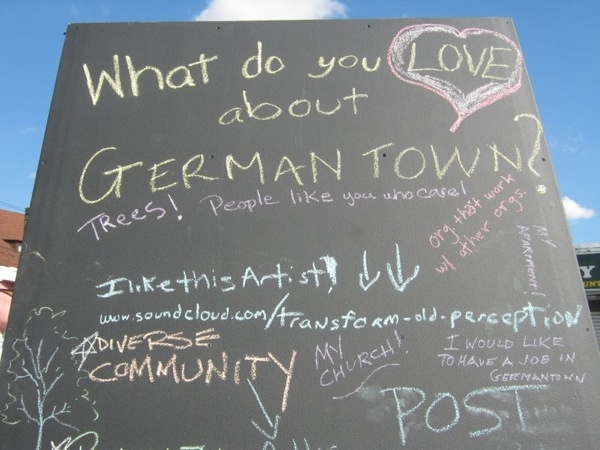
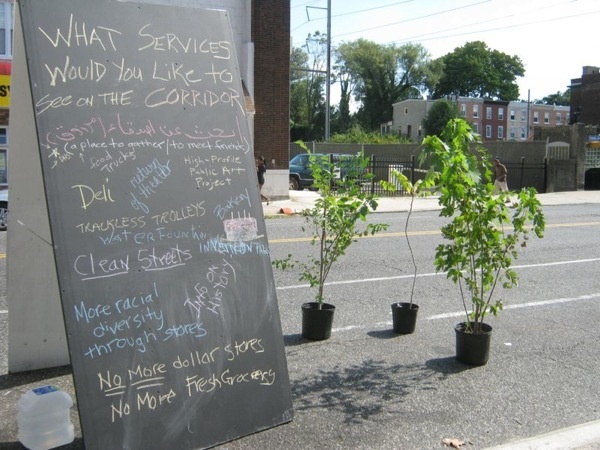
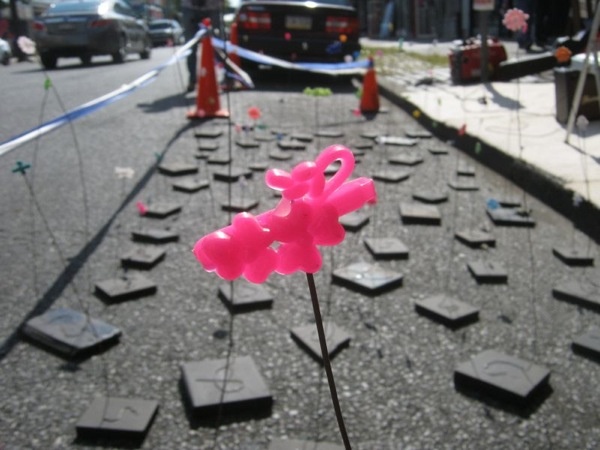
Scenes from the This is Heart & Soul pop-up story booth at the Friends of Vernon Park Spring Bazaar, October 8, 2016; Park(ing) Day Philadelphia installation, September 16, 2016; and Maple Village Story Gathering, October 18, 2016.
“These story sharing events build upon an interest and commitment in helping communities adapt and implement positive changes based upon the vision and experiences of all community members and create new opportunities for residents and community stakeholders to meet in-person,” said Lisa Jo Epstein, Executive Director of Just Act.
This is Germantown Heart & Soul made its public debut in the spring of 2016 through a series of successful pop-up story booths held along the business district at a variety of spaces, from the bustling intersection of Germantown and Chelten Avenues to the annual Juneteenth Celebration, the oldest nationally celebrated commemoration of the ending of slavery in the United States, organized by the Johnson House Historic Site. The Story Engagement Team was formed in the summer and fall of 2016 and has been meeting regularly to train for and plan the upcoming Story Circles events. The Germantown Life Enrichment Center, a community-oriented recreational and educational facility in the heart of Germantown at 5722 Greene Street, generously donated meeting space for the team and is one of several This is Germantown Heart & Soul sponsoring organizations.
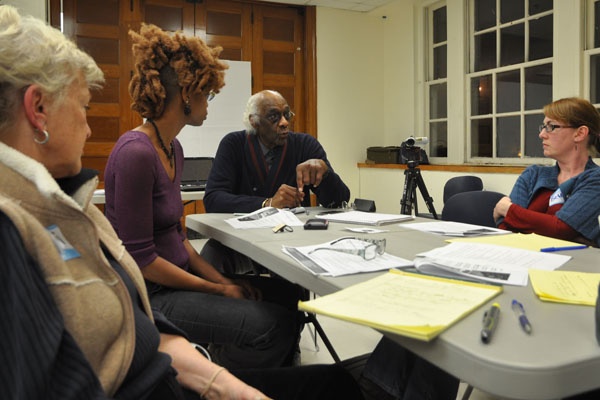
Story Engagement Team training sessions.
With the addition of the more intimate Story Circles series, This is Germantown Heart & Soul will:
Build, diversify, and strengthen resident engagement with and collective participation in civic process to increase impact and positively affect neighborhood-wide planning decisions;
Strengthen resident readiness for, and engagement in the Philadelphia City Planning Commission’s “Philadelphia2035” District Planning process for the Upper Northwest, slated for 2017-2018;
Expand who participates in public processes related to real estate development and neighborhood revitalization by engaging isolated and diverse resident groups;
Cultivate and/or improve relationships, social community cohesion and stewardship of place.
The collected data will also become the highlight of “Community Cataloguing Data Jams” – events in January 2017 where participants will listen to transcripts of stories from their neighbors to collectively identify and catalogue shared visions for what the community values.
CALENDAR OF EVENTS
The current calendar of events is included below. Additional dates will be added. All Germantown residents and community stakeholders are invited. Events are open to the public. Food and refreshments will be provided, along with live music and good cheer. Attend one or attend them all. For an up-to-date program calendar visit facebook.com/thisisgermantownheartandsoul. Contact Germantown United CDC at 215-856-4303 or heartandsoul@germantownunitedcdc.org.
Saturday, November 19 from 4 – 6 p.m. Location: Providence Baptist Church, 87 E. Haines Street, Philadelphia, PA 19144 Sponsoring Community Organization: Providence Baptist Church
Monday, December 5 from 7 – 9 p.m. Location: Awbury Arboreteum, 1 Awbury Rd, Philadelphia, PA 19138 Sponsoring Community Organization: Awbury Arboretum Neighbors, Chew and Belfield Neighbors Club, and Awbury Arboreteum
Tuesday, December 13 from 7 – 9 p.m. Location: Germantown Mennonite Church, 21 W Washington Lane, Philadelphia, PA 19144 Sponsoring Community Organization: Pastorius Community Garden, Men Who Care of Germantown, Germantown Mennonite Church, and Germantown Mennonite Historic Trust
About Germantown United Community Development Corporation
Germantown United Community Development Corporation (GUCDC) is a community-based nonprofit organization whose mission is to promote and facilitate the revitalization of the business district in the Germantown neighborhood of Northwest Philadelphia through a sustainable, creative, and community-driven approach to economic development. Vibrant commercial corridors or “Main Streets” contribute to strong neighborhoods. They provide a place to work, shop, and meet your neighbors. Through our Targeted Corridor Management Program contract with the city’s Commerce Department, Germantown United CDC provides assistance to businesses, brings planning and resources to the corridor, oversees activities to make the corridor clean and safe, and works to attract new businesses to the area. We are actively working to bolster and reinforce the vibrancy of the business district to meet the needs of the surrounding community and attract visitors from outside the immediate neighborhood. Germantown United CDC is also exploring opportunities to strengthen and diversify the mix of commercial uses in the business district, the potential to reuse vacant or underutilized properties, business and job attraction strategies, and available sources of funding to support recommended revitalization strategies.
Just Act is a distinctive hybrid of artistic and community engagement committed to social justice. Our Ensemble of artist-educators facilitate unique theatre-based programs with non-actors that activate and nurture meaningful dialogue, reflection, healing and action around complex, often divisive social issues. Just Act is committed to building and fortifying inclusive, restorative civic engagement through partnerships across sectors and differences. Informed by Theatre of the Oppressed and other art and activist strategies, our work is a creative catalyst for community activism and personal change. In all we undertake, Just Act renews and deepens the capacity of social change seekers and makers to stand up for justice on personal, inter-group and systemic levels with compassion and renewed courage. In these times of anxiety, bustle and disconnection, Just Act offers refreshing, participatory “refuel zones” to creatively pause and attend to tension and fractured relations – particularly around race, culture, and socio-economic disparities – to reweave connections and grow empathy, understanding and action plans.
Germantown, Philadelphia, PA (March 31, 2016): In an effort to align grant funding for community improvement efforts with the warmer weather months for outdoor projects, Germantown United CDC (GUCDC) is changing the grant application dates for the Fund for Germantown, the organization’s micro-grant program supporting community-driven beautification projects in Northwest Philadelphia’s Germantown neighborhood. In 2016, the deadlines will be Friday, April 15, and Friday, September 30. Funding guidelines may be found on Germantown United’s website at www.germantownunitedcdc.org. To request an application, email info@germantownunitedcdc.org or call 215-856-4303.
Germantown United CDC distributes small grants ranging from $100 to $1000 to local organizations, civic associations, businesses, and individuals seeking to beautify the Germantown neighborhood. The grant program is part of GUCDC’s ongoing efforts to promote and facilitate the revitalization of Germantown’s business corridors through a sustainable, creative, and community-driven approach to economic development.
The focus of the Fund for Germantown is to support projects that will have an immediate physical impact on the neighborhood. The fund provides grants for physical improvements across Germantown including, but not limited to, landscaping, signage, painting, reclaiming empty lots, and waste removal.
Germantown United CDC is proud to announce all 2015 grantees
Since the Fund for Germantown launched, 19 micro-grants have been awarded, with funds supporting a wide range of projects from greening to murals, neighborhood bulletin boards, cleanups and other community-building activities.
In 2015, seven projects were funded in the July 2015 round, and two were funded for the December 31 round.
Winning project ideas from 2015 include:
Business owner Lynn Washington will install a ‘Little Free Library’ to the front of Books & Stuff, her bookstore located at 23 W Maplewood Mall.
Residents Clint Steib and Villia Lateef will lead their neighbors in a planting and beautification project on the 4500 and 4600 blocks of Greene Street aimed at traffic calming.
Artist and photographer Tieshka Smith will launch the Peaceful Places public signage project in Germantown’s storied Penn-Knox neighborhood, next to the Central Germantown business corridor
Fitler Academics Plus, a public elementary school in Germantown serving students in grades one through eight located at 140 W Seymour St (at Knox St) will paint ground murals and organized games in the school’s playground
West Central Germantown Neighbors civic association will enhance their community orchard and garden project at the Tulpehocken Train Station, a SEPTA Regional Rail station at 333 W Tulpehocken St (off Walnut Ln and Wayne Ave)
Support to sustain the ongoing streetscape beautification efforts of Men Who Care of Germantown around their headquarters at 180 East Tulpehocken St (at Morton St)
The Imperfect Gallery will install an interactive sidewalk mural outside of the gallery and community space at 5601 Greene St, adjacent to the Maplewood Mall pedestrian plaza and shopping corridor
Freedom Gardens, a project by Germantown resident Susan Guggenheim, will connect local gardeners who would like to share their crop free of charge with Germantown residents looking to improve their diets with home-grown produce; Freedom Gardens will be identified by lawn signs and online via Google Maps
Support to sustain Chew-Belfield Neighbors Club’s ongoing cleaning and beautification projects in East Germantown
The Fund for Germantown us supported through generous seed funding by local real estate developers Howard Treatman and Ken Weinstein. “We are excited to support these small projects that have a big impact”, says funder Ken Weinstein. “These kinds of initiatives are exactly what we had in mind when we envisioned the Fund for Germantown”, said Howard Treatman. “It’s been great to see how Germantown United has been able to empower the community and leverage grassroots efforts.”
About Germantown United CDC
Germantown United Community Development Corporation is a 501(c)3 organization that was created to promote and facilitate the revitalization of Germantown’s business corridors through a sustainable, creative, and community-driven approach to economic development. Founded in 2011, Germantown United CDC’s focus is to work with residents, businesses and community organizations to create an inspirational vision of Germantown’s business corridors and surrounding neighborhoods, create innovative case studies and sustainable business models to attract green-oriented developers, and recruit forward-thinking investors committed to fostering sustainable economic growth and development for all Germantown residents. Learn more at http://germantownunitedcdc.org.
Contact Germantown United CDC
Andy Trackman, atrackman@germantownunitedcdc.org
Emaleigh Doley, edoley@germantownunitedcdc.org
Office: 215.856.4303
The article features Ruth Seeley, the president of the Friends of Vernon Park – the organization that courageously led the charge for the park renovations – alongside Germantown United CDC’s new Commercial Corridor Manager Emaleigh Doley, who discussed the challenges impacting efforts to improve the nearby shopping district.
This is an exciting time for Germantown. If you are energized about the neighborhood’s potential, consider joining one of the many civic groups – like Friends of Vernon Park, your local Registered Community Organization (RCO), or GU’s own volunteer committee – and get involved in moving Germantown forward!
Germantown is in the news! Germantown United CDC staff pick your must-reads of the month, with a focus on business, economic development, and neighborhood revitalization news.
Ex-textile mill now houses artists [The Philadelphia Inquirer] Woodworker John Fiorella and his business partner/brother, Mike, have found ways to make this Germantown building as relevant to the community as its predecessor was, using it as their shop and renting out 25 artist’s studio spaces.
“The ultimate objective is to present a better Germantown.” – Joe Martin, owner of Acclaim Academy
Joe Martin discussing with fellow Germantown business owner. Photo courtesy of Philadelphia Neighborhoods.
“On the bright fall morning I visited, Vernon Park was performing according to plan. A half-dozen preschoolers dashed around the playground, their parents and caregivers taking in the sunshine. A couple strolled the paths hand-in-hand while a medical assistant walked briskly to do an errand…” – Inga Saffron, The Philadelphia Inquirer
“Painters and dancers are transforming our Germantown community in the most amazing way. Art is an equalizer. It levels the playing field.” – Jim Hamilton, Rittenhouse Soundworks
Rittenhouse Soundworks, a brand new 74’ x 62’ performance facility with exposed brick walls and a cathedral-style wooden ceiling in Germantown. Photo by Jim Albert/Full Frame Fotography via Chestnut Hill Local.
“Center City is important to Philadelphia’s health and it always will be, but we cannot ignore the commercial corridors that extend beyond that if we want to have a strong, growing small-business community, a meaningful increase in employment for Philadelphians of color, reduced crime, and a more strong and diversified economy for the long term.” – Mayor-elect Jim Kenney
Germantown, Philadelphia, PA (October 1, 2015): Germantown United CDC is proud to announce the next round of grantees for the Fund for Germantown, the organization’s micro-grant program supporting community-driven beautification projects in Northwest Philadelphia’s Germantown neighborhood.
Since the program launched, 17 micro-grants have been awarded, with funds supporting a wide range of projects from greening to murals, neighborhood bulletin boards, cleanups and other community-building activities.
Through generous seed-funding by local real estate developers Howard Treatman and Ken Weinstein, Germantown United CDC distributes small grants ranging from $100 to $1000 to local organizations, civic associations, businesses, and individuals seeking to beautify the Germantown neighborhood. The grant program is part of Germantown United CDC’s ongoing efforts to promote and facilitate the revitalization of Germantown’s business corridors through a sustainable, creative, and community-driven approach to economic development.
The focus of the Fund for Germantown is to support projects that will have an immediate physical impact on the neighborhood. The fund provides grants for physical improvements across Germantown including, but not limited to, landscaping, signage, painting, reclaiming empty lots, and waste removal.
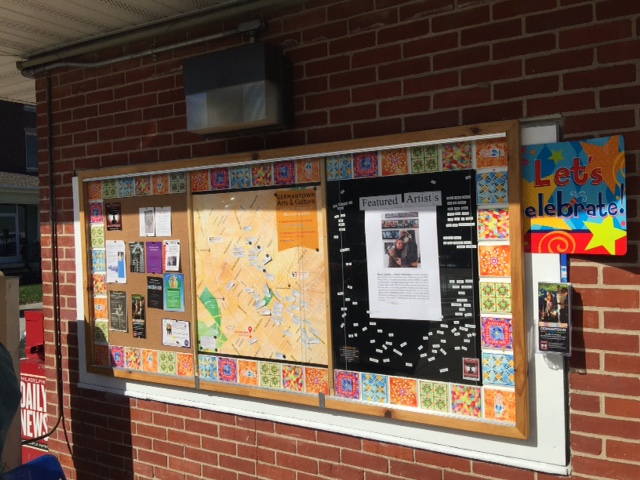
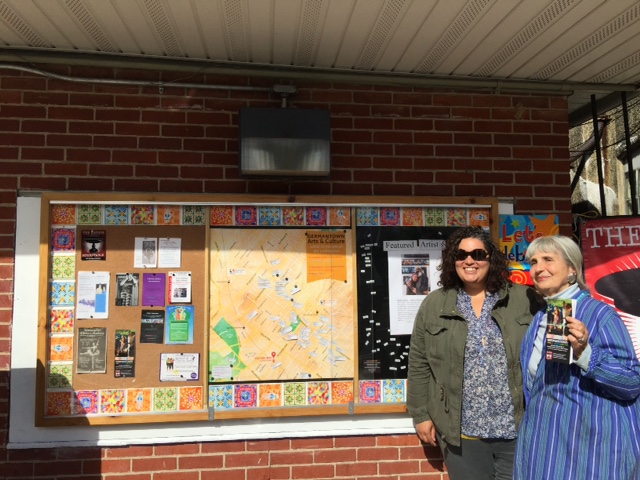
In October, the Germantown Artists Roundtable celebrated the installation of a new arts-focused community message board at the Chelten Avenue SEPTA station, located on Chelten Ave between Pulaski Ave and Morris St. The thematic board, created by the Artists Roundtable, is a Fund for Germantown project, supported by Germantown United CDC. Pictured: Emaleigh Doley, Commercial Corridor Manager, Germantown United CDC, and Paula Paul, Germantown Artists Roundtable.
The latest Fund for Germantown winning projects ideas are:
Artist and photographer Tieshka Smith will launch the Peaceful Places public signage project in Germantown’s storied Penn-Knox neighborhood, next to the Central Germantown business corridor
Fitler Academics Plus, a public elementary school in Germantown serving students in grades one through eight located at 140 W Seymour St (at Knox St) will paint ground murals and organized games in the school’s playground
West Central Germantown Neighbors civic association will enhance their community orchard and garden project at the Tulpehocken Train Station, a SEPTA Regional Rail station at 333 W Tulpehocken St (off Walnut Ln and Wayne Ave)
Support to sustain the ongoing streetscape beautification efforts of Men Who Care of Germantown around their headquarters at 180 East Tulpehocken St (at Morton St)
The Imperfect Gallery will install an interactive sidewalk mural outside of the gallery and community space at 5601 Greene St, adjacent to the Maplewood Mall pedestrian plaza and shopping corridor
Freedom Gardens, a project by Germantown resident Susan Guggenheim, will connect local gardeners who would like to share their crop free of charge with Germantown residents looking to improve their diets with home-grown produce; Freedom Gardens will be identified by lawn signs and online via Google Maps
Support to sustain Chew-Belfield Neighbors Club’s ongoing cleaning and beautification projects in East Germantown
“We are excited to support these small projects that have a big impact”, says funder Ken Weinstein. “These kinds of initiatives are exactly what we had in mind when we envisioned the Fund for Germantown”, said Howard Treatman. “It’s been great to see how Germantown United has been able to empower the community and leverage grassroots efforts.”
This is the third round of giving for the Fund for Germantown, which launched in the summer of 2014 and features two grant cycles per calendar year. The deadline for the next Fund for Germantown grant cycle is December 31, 2015. Funding guidelines may be found on Germantown United’s website at www.germantownunitedcdc.org. To request an application, email info@germantownunitedcdc.org.
ABOUT
Germantown United Community Development Corporation is a 501(c)3 organization that was created to promote and facilitate the revitalization of Germantown’s business corridors through a sustainable, creative, and community-driven approach to economic development. Founded in 2011, Germantown United CDC’s focus is to work with residents, businesses and community organizations to create an inspirational vision of Germantown’s business corridors and surrounding neighborhoods, create innovative case studies and sustainable business models to attract green-oriented developers, and recruit forward-thinking investors committed to fostering sustainable economic growth and development for all Germantown residents.
Germantown United CDC is participating in Philly.com’s Street Level series, part of The Next Mayor project.
The series focuses on specific issues pertinent to a particular community as addressed by local leaders and asks how the next mayor of Philadelphia can help.
Our question is pretty simple – Why are there zero public trash cans for roughly a mile stretch on Germantown Ave, between Penn and Berkley streets, an area that houses numerous storefronts and is serviced by the SEPTA 23 bus route at every block?
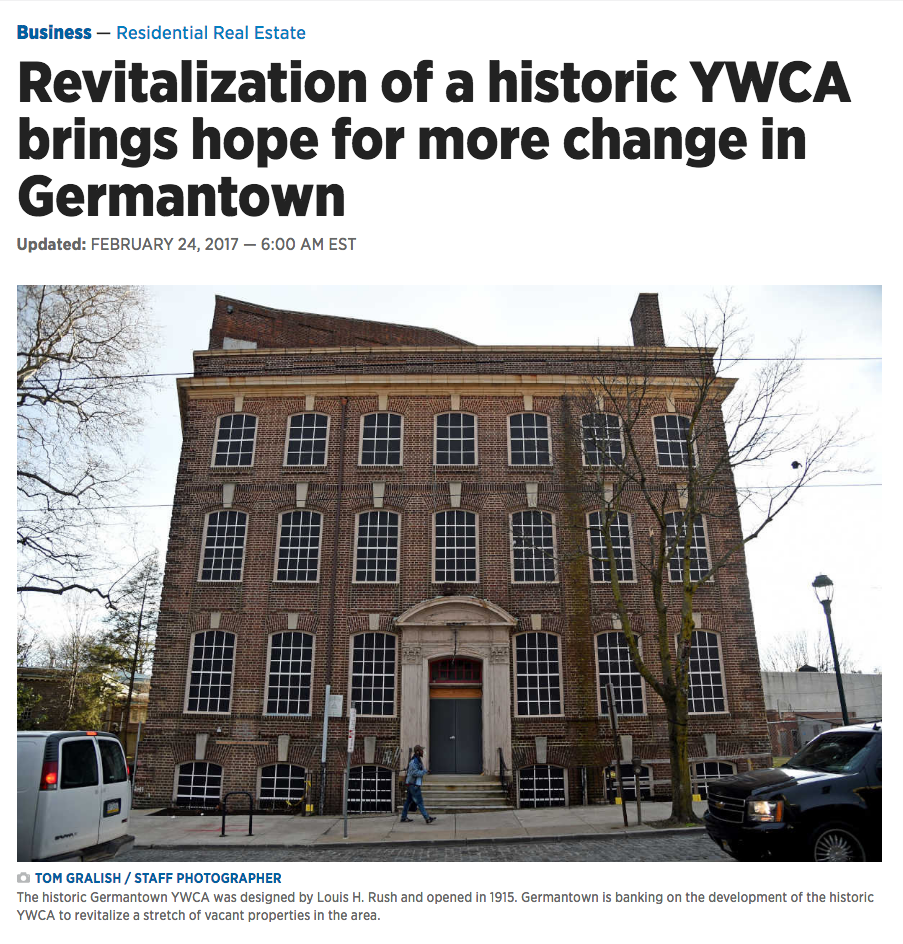
FOR IMMEDIATE RELEASE: Councilwoman Bass uses NTI Funds to Support the YWCA
As the Councilwoman for the 8th district it is my job to advocate for every neighborhood, keeping in mind the unique perspectives of residents while recognizing community treasures.
When I took office in 2012, the question of what to do about the YWCA loomed large, as this building is an integral part of the neighborhood’s history. And while we are still working towards a final answer, I am beyond pleased that we have endeavored to explore additional options. I am most impressed with the creativity of the ideas that have been presented thus far, and nothing less should be expected in and for Germantown.
While we await the Request for Proposals (“RFP”) to be issued by the Pennsylvania Redevelopment Authority (“PRA”) this Spring, I will continue to speak with local developers and discuss their bold and unique visions for Germantown. Some of the concepts suggested thus far include full market-rate condominiums and/or rental units, office space, retail options and recreation uses. These suggestions have been presented both individually and in various combinations, and I am excited about the possibilities ahead. We are seeking developers that have the capacity to move quickly, who have a plan to involve the community in the process, and who take into account the importance of environmental sustainability. The RFP will be an open and transparent process, with an emphasis on preservation.
But beyond what goes into the YWCA, we must address the building’s condition and the recent concerns brought forward at a community meeting around this topic back in January. As rumors began flying about the building’s condition, (i.e., instability), it was critical that we operated on the facts. Working with the Department of Licenses and Inspection, and private consultants including former L & I Commissioner Bennett Levin, we got those facts which I am pleased to report.
I am happy to announce the YWCA is not imminently dangerous, and I have committed $2.2 million of my Neighborhood Transformation Initiative (“NTI”) funds to rehab the property and make the building safe and stable. With additional funds from the PRA, totaling approximately $4 million, we are able to provide the resources to protect and weatherize the property to prevent the building from any further structural deterioration. We will also be able to provide the much needed ‘curb appeal’ to make the property more marketable, and aid in stabilizing the commercial corridor.
We have to be thoughtful and deliberate about development in Germantown-just as we have in Mt. Airy and Chestnut Hill. Nothing less will be acceptable. With the NTI funds I am committing to this project, it will help make the site more attractive to developers while protecting a vital part of our City’s history. The building is currently in poor condition, but with our subsidy from NTI and the PRA, it will be saved and developed.
Germantown United CDC gets tough love from community rejuvenators
MARCH 1, 2012 | By AMY Z. QUINN
Photos Courtesy of WHYY
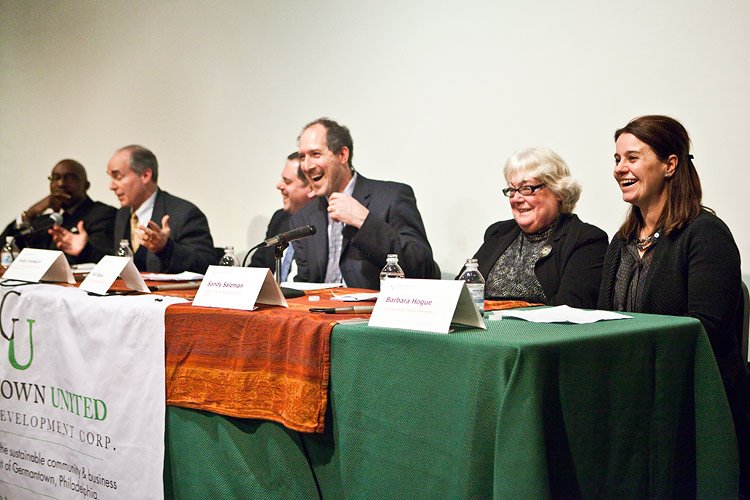
The community development experts who came to Northwest Philadelphia on Wednesday to meet with Germantown United Community Development Corp. and offer advice didn’t pull any punches in talking about the challenges ahead.
Everyone in the community won’t agree with what you’re doing — and they don’t have to, one advised.
Be willing to go to great lengths to get people involved — even if it means sometimes playing on their fears, another said.
Understand that gentrification will mean that some people will leave — and that’s not always a bad thing, yet another said.
And most of all, they offered, be ready to fight against low expectations — from within and without.
“People have low expectations, and it gives them an excuse not to engage,” said Colvin W. Grannum, president of the Bedford-Stuyvesant Restoration Corp., which began revitalization efforts in New York City in 1967.
Similar challenges
At the panel discussion, held on the Germantown Friends School campus, Grannum talked about some of the challenges the nation’s first community development corporation has faced in the 45 years since it was started by U.S. Senators Robert F. Kennedy and Jacob Javits.
While Bed-Stuy had riots that touched off its downward spiral, Germantown doesn’t have one signature traumatic event that spurred its decline. Decades of middle-class flight were worsened by Germantown Settlement’s corruption and neglect. However, many of the challenges are the same, Grannum said.
His group had success early on with residential development, but that alone won’t rebuild a community, panelists said.
“The easiest thing to do is build houses,” said Grannum, but the greater challenge is creating a mix of residential, commercial and community uses. Some startups will fail while others will thrive, but many different approaches should be tried.
In Bed-Stuy, the CDC has backed everything from a Pathmark supermarket to artist space and schools, aimed at keeping residents working and shopping in the neighborhood.
“People just got in the habit of going outside the community to shop,” he said. Then, they assumed that “if they put something here, it’s not going to be good anyway.”
That struck a chord with the audience in Germantown, where the desire for more upscale retail bumps against the reality of the lower-income shoppers who frequent the commercial corridors on Germantown and Chelten avenues.
A new direction ahead?
Still, there was acknowledgment that Germantown seems poised to make a change.
“Germantown has some real assets to build on, and there’s real potential to create an organization that has some lasting power,” said Rick Sauer, executive director of the Philadelphia Association of Community Development Corporations.
One thing Germantown has working for it is its history. Founded in 1683, the neighborhood is home to 15 historic sites, seven of which are National Historic Landmarks. Each year, more than 40,000 visitors and school children come to see the neighborhood’s offerings, said Barbara Hogue of Historic Germantown.
But despite being a Colonial Historic District, it’s difficult to draw outside tourists and even tougher to keep them in Germantown once they arrive. Hogue has applied for a grant through the Pew Charitable Trust’s Heritage Philadelphia Program, in hopes of creating a festival in 2013 around a theme of the struggle for freedom.
Stephen P. Mullin, a former finance and commerce director and now principal at Econsult, talked about the importance of controlling the real estate involved, whether through CDC ownership or in working with property owners who are also vested in the community.
Engage those who want to gripe
Some of the most practical advice came from Sandy Salzman of the New Kensington CDC, which has put in 27 tough years trying to craft new development and a renewed sense of identity in Fishtown, Kensington and Port Richmond.
“There are always people who are going to get involved when they have something to gripe against,” she said. Her message: Even if residents come to the table to fight against something — in her neighborhood, it was the SugarHouse Casino — seize the chance to keep them involved.
Salzman said when her group started to notice artists and other creative professionals moving northward from Old City and Northern Liberties, there was a concerted effort to court them.
“We decided that we could either capture them and try to get them to stay, or we could just watch them keep on moving along,” she said
So, they created the Frankford Avenue Arts District and events like the Kensington Kinetic Sculpture Derby. Now, they are now watching the neighborhood fashion itself a new identity.
An audience-submitted question asked what Germantown should do to attract better retailers in the face of proliferating nail salons and beauty shops. Salzman suggested creating a beauty and fashion district to encourage quality.
John Churchville, Germantown United CDC’s first president, called it the group’s “coming out party.”
Character, culture and competence will be the group’s touchstones, he said, pledging an environment of transparency and action.
“We’re not here to fight and to fuss and carry on,” he said. “We are here to get something done.”
—
NewsWorks has partnered with independent news gatherer PlanPhilly to provide regular, in-depth, timely coverage of planning, zoning and development news.
After ninety-nine years of serving families throughout north and northwest Philadelphia, Germantown High School (GHS) closed its doors last June. One of 23 schools shuttered by a School Reform Commission vote, GHS and its neighbors have the same questions communities across the city now face as students relocate and buildings sit vacant. What next?
For some sites, answers are beginning to materialize. In February, news broke that Drexel University will purchase University City High School at 36th and Filbert Streets in partnership with Wexford Science & Technology L.L.C., with plans for a mixed-use commercial, residential and educational space.
And in Yorktown, the William Penn Development Coalition (WPDC) is gaining the financial, political and neighborhood momentum to re-open William Penn High School, which closed in 2010. WPDC wants a neighborhood school with a STEM (science, technology, engineering and math) curriculum, meanwhile Temple University is closing in on the property with its own offer to the District.
In Germantown, emotions ran high as decades of graduates convened for the historic school’s last days. That pain still echoes among some of the neighborhood’s leaders, who complain that there was never adequate transparency from the School District, both in its school-closing selection process and the consideration of proposals for the empty sites.
Fortunately, those issues haven’t stopped concerned residents from looking toward to GHS’s next phase. Will this neighborhood nexus see new life as a vocational school? A mixed-used development? A community fitness and art space? And can the new incarnation simultaneously honor the assets of this tight-knit community while addressing some of its deep educational woes?
According to Germantown United Community Development Corporation(GUCDC) vice president Julia Stapleton Carroll, many of the students’ ideas, though developed independent of GUCDC discussions, were similar to those of the CDC. As a founder of the Germantown-based Principled Schools, a startup nonprofit that helps local schools with effective management and policy, Carroll says it’s “a personal interest of mine to see that our community has quality school options.”
She’s taken a leadership role in a GUCDC-facilitated GHS “planning group,” now working on a formal mission statement.
“GUCDC is interested in making sure that space is not vacant,” she says. “I think the community is very passionate about having an educational option for our kids in Germantown, as opposed to [them] having to go to Roxborough or West Oak Lane.”
And, hopefully, the building’s owner: “We’ve informed the School District of every single meeting that we have,” adds Carroll.
So far, the GUCDC consortium has considered the GHS site as a possible home for the nearby Hill Freedman Middle School — it recently received District approval to expand to high school, and needs new space. But Hill Freedman wouldn’t fill up the large GHS building.
“That leaves the door open for us to have a high school there focused on career and technical training,” suggests Carroll, arguing that a campus share might be a natural fit given the school’s two entrances (one on Germantown Avenue and one on High Street). “It’s a win-win. We want to have space that would be available to the community as well — like a gym open to the community on weekends, [or] adult training or technical training in the evening.”
Technical training is a major theme for GHS. Several community leaders agree that with the right organization or corporation to adapt the school’s curriculum, GHS could become an occupational magnet in a city whose drop-out rate still hovers around 25 percent.
Vera Primus also supports occupational training. She graduated from GHS in 1971 and is the president of GHSAA, which has remained active since the school’s closing.
She touts the value of turning the school into a “vocational resource” as well as an educational one, pointing to a former partnership that brought PNC Bank into the building as part of an occupational business center.
According to Primus, GHSAA’s hopes for the building are simple: They want to preserve its history by keeping its name and it “must serve the children in the community,” with no admission tests required. The group also wants the new institution to be “a resource center for businesses to come in to help and support the children.”
On this topic, no name comes up more than Comcast, which was founded by GHS graduate Ralph Roberts.
“What if Comcast adopted Germantown High School [and] made it a cable technology trade school?” asks Greater Philadelphia Association of Realtors(GPAR) president Allan Domb. Promoting such occupational partnerships for newly empty Philly schools is a major item on GPAR’s agenda. The organization is pursuing a meeting with School District superintendent William Hite.
Domb suggests that companies such as Comcast, Aramark or Urban Outfitterscould partner to reopen schools and remake them as vocational centers preparing graduates for good jobs in Philadelphia’s top sectors, including cable technology, food services, facilities management, retail, health care and financial services. He emphasizes that this would be an educational partnership, not a financial one — funding would still be needed to launch and operate the proposed schools.
“At the end of the day, it’s not just to educate, it’s to provide employment for those who are educated,” says Domb. “That’s been the missing link in our system.”
He predicts that by increasing the likelihood of a good salary upon graduation, a GHS reborn as a trade-school partnership with Comcast could reduce drop-out rates and draw students from across the region.
“Just think about how it could rejuvenate the whole neighborhood,” he adds.
“I’ve got a call into Ed Rendell right now,” says Carroll of pursuing the Comcast connection; Rendell spoke at a GUCDC fundraiser in the past. David Cohen, Rendell’s former chief of staff, is now the executive vice president at Comcast.
Paula Paul, an active Germantown community member who helps lead the Artists Roundtable and attends the GUCDC consortium meetings, offers measured support for the occupational focus.
“You don’t want only a vocational school,” she says. “You want a school that prepares kids for college if they want to go.”
“The decisions about what kind of occupation, what kind of training, would be pretty important,” she continues, emphasizing her preference for a technology-savvy arts curriculum that includes the visual, performing, musical and literary arts.
She imagines art education programs benefitting students during class and after school, as well as art classes open to “the whole community.” Germantown, long home to a powerful community of artists, has “many talented, experienced people who could easily be hired if there were jobs,” she says of the opportunity for under-employed locals who work in the creative fields.
“The hope would be that it’s a little unique,” she says of a “forward-looking” vocational school that would be different from any other program in the city.
Or, as Primus puts it, “Basically what we’re trying to do is keep the name alive and keep us together, and support our children.”
G-town Radio has a new podcast series called the Northwest Soapbox. Community members are given the chance to comment on things happening in our neighborhood, share important information and challenge us to take action. The first installment is from attorney Yvonne Haskins of Germantown United CDC. The first installment of G-town Radio’s new podcast series The Northwest Soapbox features attorney Yvonne Haskins of Germantown United CDC. Yvonne is the co-chair of GU’s Program Committee and the informal advisor on zoning/land use questions. In the podcast, Yvonne speaks about Germantown’s prominent past, recent struggles and community reemergence.
The Northwest Soapbox is a platform for the people of Northwest Philadelphia to offer commentary, share news or make a call for action. Each week a different person speaks to issues affecting our community.
Priorities for Germantown United CDC take shape, include business corridor and historic preservation
MARCH 6, 2012 | By ANDY SHARPE
Germantown is a neighborhood that is characterized by the remnants of its past colliding with the challenges of its present. It is definitely one of the most famous historic sections of Philly, right behind Old City in the eyes of many. Yet, this storied history comes with the backdrop of crime, poverty, trash, and neighborhood division on many blocks. This neighborhood division has been manifested by the corrupt Germantown Settlement, which was a social service and community development agency that ran out of money, and a tiff over retail development on Chelten Avenue.
It’s why Germantown residents are even more motivated to redevelop and cultivate a sense of community. In fact, the Germantown United CDC (GUCDC) was formed toward the end of last year to reinstate transparency to the neighborhood. The CDC is currently in the process of selecting its Board, and serves the racially, economically, and religiously diverse area from Chew Ave. to the north, Wissahickon Ave. to the south, Wayne Junction Station to the east, and Johnson St. to the west.
Photo Courtesy of Dana Scherer
John Churchville, the president of GUCDC, is passionate about making a difference. “I’d have to say that our first priority is to establish our trustworthiness as an organization in Germantown,” says a motivated Churchville. He says this means reaching out to local businesses, residents, civic associations, and developers. The president also detects a hardy sense of optimism among those who are interested in serving on GUCDC’s Board.
Once GUCDC becomes more entrenched in the neighborhood, one of its priorities will be re-utilizing the historic Germantown Town Hall. Churchville says that the re-use of Town Hall will be a personal commitment of his. He wants to take advantage of the Civil War-era building’s location across from Germantown High School by turning it into a building of learning that will feature post-secondary level science, technology, and math and high-school level “green entrepreneur” training. The building is up for sale by the Philadelphia Industrial Development Corporation (PIDC).
Another GUCDC priority will be to clean up the Chelten and Germantown Ave business corridors. The corridors form perpendicular Main Streets feature a diverse selection of small businesses, but are pockmarked by trash and other quality-of-life problems. The CDC has already held clean-ups along Chelten, and has proven its intimate concern with the avenue since its days speaking out against the new shopping center at Chelten and Pulaski.
It’s not hard to guess that GUCDC sees Germantown’s history playing a vital role in the area’s future. Barbara Hogue, the executive director at Historic Germantown, is hoping to assist in this effort. She says her organization has submitted a grant application to the Pew Charitable Trust for “the interpretation of the enduring search for freedom in Germantown.” If they receive the grant, Hogue foresees Historic Germantown working setting up pop-up exhibits at vacant storefronts and organizing lectures at local coffee shops in an event commemorating the anniversary of the Emancipation Proclamation.
On Tuesday, city officials, business owners, and other stakeholders sat down at the Flying Horse business center on Pulaski Avenue to discuss the future of the Germantown Special Services District, the agency created in 1995 to collect revenue from property owners in order to fund improvements, like street cleaning, along Germantown Avenue. For nearly two years, the agency has been dormant following a decision by City Council not to reauthorize its board, widely regarded as ineffective and closely tied to the corrupt and now defunct non-profit, Germantown Settlement. That group imploded in 2010 after evidence emerged suggesting rampant misspending by the group’s director, Emmanuel Freeman, raising endless questions about the fate of nearly $100 million sunk into the organization over 20 years.
Waves of scandal and city intervention have left the neighborhood largely leaderless at the local level, particularly in the realm of economic development. As the city tinkers with the GSSD, other grassroots organizations have struggled to emerge from the rubble left behind by the collapse of Germantown Settlement and defy the lingering skepticism of officials who believe that the ancient neighborhood is a black hole for government dollars.
Germantown Avenue | Photo: Theresa Stigale
The consequence of this has been that holdovers, like the GSSD, are still paralyzed, and non-profits that have stepped up to fill the void left by Germantown Settlement have had a tough time getting support from the city. Government investment, significant enough during the bad old days, has slowed to a trickle, and one of Philadelphia’s most important, and most under-realized, neighborhoods remains in limbo. The Germantown United Community Development Corporation wants to be the group that breaks the cycle.
The group emerged out of a battle last year over the redevelopment of a neighborhood Shop-Rite into an auto-oriented strip mall with an anchor Sav-a-Lot, a discount chain that residents criticized as lowering expectations for commercial activity in Germantown. Finding few extant community groups to rally behind, neighbors collaborated to form their own.
Andrew Trackman of Germantown United on Maplewood Mall | Photo: Theresa Stigale
“A lot of protest against this was because basically neighbors felt that this was going to be another dollar store-type, low-end development,” said Andrew Trackman, a marketing consultant who joined Germantown United’s board earlier this year. “There was this perception that Germantown was a certain way, while there was plenty of evidence that it wasn’t.”
Yvonne Haskins, a lawyer and co-chair of Germantown United’s Program Committee, says the Sav-a-Lot project was the last gasp of the dysfunctional, politically connected leadership that profited from selling the neighborhood as a dumping ground.
“This was primarily because Germantown has had such fractured and corrupt leadership. You have this perception of Germantown as being a low-income, blighted community, when most of the housing stock is pretty strong,” said Haskins. “It’s unfortunate that because our community is majority black that it’s also associated with blight. That stereotype has prevailed, and that’s why we got a dollar store in a transit-oriented development. Both middle and low income shoppers want better options.”
The Sav-a-Lot opened last December, but rather than dissolving, Germantown United used the attention and membership it had gained to try to shape commercial development in the neighborhood. The group began hosting public planning sessions, adopted the “CDC” moniker, and filed for non-profit status. It has spent the last several months strengthening its board, which, alongside business owners and employees of the neighborhood’s numerous historic sites, now includes a professor, an investment banker, a member of the city’s Commerce Department, and a project manager of Post Brothers Apartments.
Chelten Avenue | Photo: Theresa Stigale
Haskins is quick to trumpet the diverse and powerful group Germantown United has assembled, as well as the artistic events and neighborhood movie nights sponsored by the volunteer board. However, she notes that traditional investment and business development, the primary activities of most CDCs in Philadelphia, have been non-existent. The reason is simple: the group has virtually no funding, and therefore no staff.
“These are small activities compared to the kind of strategic planning we’d like to do, but the only money we have right now is money we’ve personally contributed out of our own pockets. Our job is to try to raise money to get an executive director,” said Haskins.
In most neighborhoods, CDCs draw stability from small but reliable funding streams and tax credit programs managed from the city’s Commerce Department to at least maintain essential employees. Haskins says her group wasn’t ready to apply for a corridor manager grant offered by the Commerce Department last January, but will do so this year. However, she says the city could still offer other forms of financial support in the meantime. She expressed uncertainty over where the organization stands with the city and what the reactivation of the GSSD will mean for its future.
“It’s slow. I couldn’t tell you where the city is in all this, but Commerce has been encouraging. We’re working on trying to convince them that we’re ready, but they say they want to see us build more capacity. It’s a chicken and egg situation. How do you build capacity with no money?” said Haskins, who says Germantown United is currently trying to seek out donations to hire a part-time fundraiser.
There is a certain level of irony to a situation where a new, relatively transparent group is struggling to even get a startup grant, while Germantown Settlement, for decades, was awash with millions of dollars and virtually no oversight. Haskins says part of it is politics.
“Well, [former City Councilwoman] Donna Reed Miller was probably the biggest ally of Germantown Settlement, and [1st Congressional District Representative] Chaka Fattah,” said Haskins, noting that Germantown United does not have similar political backing.
Miller’s recently elected replacement, Fattah protégé Cindy Bass, has invested time and attention into the reactivation of the GSSD, but has not taken a stance on Germantown United.
“I don’t know who she would favor to have that kind of status in Germantown,” said Haskins, who wondered if Germantown United’s dustup over the grocery store damaged their reputation with pols.
In an official statement to the Hidden City Daily, Bass said, “Community groups like the Germantown Artists Roundtable, Germantown United, Germantown Restoration CDC, and Germantown Community Connection have been great partners so far and we look forward to continuing work with these groups and others.”
Her statement mirrors those by other city officials, who say they are hesitant to “play favorites” in the neighborhood non-profit circle. While neither Haskins nor representatives from the Commerce Department characterized the groups as being combative or even having redundant objectives (Germantown Restorations focuses on affordable housing and the Germantown Community Connection is a community group that is not explicitly focused on economic development), deputy commerce director Kevin Dow said that preemptively “anointing” one organization was inappropriate and had the potential to stir up animosity and unnecessary competition.
There is also a concern that supporting a group with no track record could lead to another Germantown Settlement scenario down the road. Dow acknowledged that he wanted to see more development and continued transparency from organizations like Germantown United, which he said had made promising strides, before the city vested its limited resources.
“Germantown United is, quite simply, a startup organization. We also don’t want to be in the position where we are the sole funder of an organization, because then they become reliant on government funding for everything,” he said.
Dow acknowledged that this process takes time, but said the city was not abandoning Germantown in the meantime. “We’re not waiting. We’re trying to identify resources to improve the corridor,” he said, pointing to the city’s façade improvement program and streetscape improvements to Germantown Avenue as evidence that the city was still investing in the neighborhood. Moreover, Bass’s office claimed in its statement to the Daily that it had “started planning with the Commerce Department for a revitalization of Maplewood Mall; met with Parks and Recreation to plan a makeover of Wister House and Vernon Park; spoken with the Redevelopment Authority regarding the Germantown Avenue YMCA building.”
It’s possible that the city is simply putting the crop of post-Germantown Settlement organizations through their paces to see which groups have the drive and stability to warrant a long-term financial commitment. In certain ways, it is refreshing to see City Hall not tossing money at potential fly-by-night organizations, but nothing can take away from the fact that in the meantime, the vast neighborhood still struggles, leaderless. It is a familiar state for Germantown, a neighborhood of unparalleled potential, with endless historical assets and a sprawling, heartbreakingly beautiful commercial avenue, all of which have teetered on the brink of collapse for decades.
But Tuesday’s meeting on the future of the special services district may signal that for the first time since the collapse of Germantown Settlement, there is real hope the leadership impasse may break. In January, the City will put out an RFP for a commercial corridor management grant, creating the possibility that a strengthened Germantown United will receive funding for the first time. Councilwoman Bass’ office said they anticipated the new Special Service District board to be approved on April 19th, setting the stage for street cleaning and other operations to resume by June, 2013.
Since the Germantown United CDC incorporated late last year, its founding members have met in small groups and at large forums, discussing and eventually agreeing on a set of bylaws and appointing a board of directors to run things.
The new CDC has drawn a varied crop of members, from John Churchville, a respected businessman “of a certain age,” to Emaleigh Doley, a young professional who’s been trying to improve Germantown starting on her own block.
But there is room, and need, for more.
How to get involved
Applications and information about serving on the board are available on the group’s website, along with a questionnaire and the Code of Conduct for board members.
Germantown United is currently accepting applications to join its first full board of directors. Nine members of the original steering committee will serve on the permanent board, but a full board will include up to 21 members, drawn from various constituencies.
A nominating committee, chaired by Sandi Weckesser, is gathering the applications and will make selections. Some steering-committee members, like Doley, are not seeking board seats but will continue to be involved in committees.
“People are putting in an incredible amount of hours” on meetings, research and organization, Doley, 28, said.
Evolving neighborhood focuses
Though many got involved around the Chelten Plaza fight — the catalyzing event for Germantown United — revitalization of the neighborhood’s commercial corridors overall is the focus going forward.
“I feel like it has shifted in a very positive direction,” Doley said. “The best thing to come out of Chelten Plaza is the organization, the uniting.”
Zoning is also an issue, one highlighted by the recent minor flap that erupted when New Directions For Women sought a variance to continue operating a correctional facility on Germantown Avenue.
Many in the community had never realized the facility existed, and without one umbrella civic group or zoning committee for Germantown, it was left to the property’s owner to hold a public meeting to let people know what was going on.
A common zoning-review committee for the neighborhood would give developers a starting point for communication and accountability with the community.
Weckesser has lived in Germantown since the 1970s — her house, a Victorian castle, is sort of a local celebrity — but for her, too, it took the Chelten Plaza debacle to get her really involved in neighborhood activism.
A former development executive for Fox Chase Cancer Center, she’s worked with corporate boards of directors and is coordinating the selection of board members for Germantown United.
The rules
Anyone is welcome to apply, but there will be standards, Weckesser said.
The group’s bylaws call for the board to be comprised of about 30 percent “highly functioning members of the Germantown community,” likely representatives of other civic groups; 15 percent local business owners; 15 percent commercial developers with track records of sustainable smart-growth projects; and 40 percent professionals or experts in areas such as accounting, law and design.
Bylaws also set forth requirements for involvement for board members and require outside audits of Germantown United’s budgets — not that the group has any money right now, but members of the steering committee thought it was important to set ethical standards from day one, Weckesser said.
Germantown United’s website calls for an April 1 deadline on applications, but that’s not an absolute cutoff date, Weckesser said.
NewsWorks has partnered with independent news gatherer PlanPhilly to provide regular, in-depth, timely coverage of planning, zoning and development news.
New Germantown CDC tries to “dream big” about neighborhood’s future
NOVEMBER 18, 2011
Nearly two dozen Germantowners met at the renovated Greene Street YMCA to “dream big” about the future of the commercial corridors in the neighborhood.
This came after a steering committee and representatives from five West Germantown community organizations mobilized behind a newly formed community development corporation called Germantown United. Last week, they said they wanted to go public with their ideas.
Among their visions were enlisting a Fairmount Park Ranger to patrol Vernon Park, promoting housing restoration, hosting workshops, bolstering town watches and teaming up with existing programs and organizations like a local entrepreneurship apprentice program run by the Greater Germantown Business Association.
The group also discussed an idea to replace unsightly metal security grates along Germantown and Chelten avenues with historic photographs. That way, the group envisioned, the evening scene would go from ghost town to providing a retro peek at the business strip of a century ago.
When residents listed the types of retail businesses that would bolster their ideal corridor, they cited flourishing office and art-supply stores, locally owned hardware stores and sit-down restaurants. They also created a directory of stores they already frequent and want to promote.
Seeking cooperation
One of Germantown United’s lead organizers is Yvonne Haskins, the attorney for the Chelten Plaza zoning appeal. She admitted the process thus far has been led by those willing to volunteer time as opposed to broader outreach.
“We are incorporated but not structured yet,” she said. “What we’re trying to do right now is learn as much as we can and engage the community as much as we can in a short period of time.”
Haskins noted that the focus is on the neighborhood’s western portion because East Germantown residents have existing organizations in place. Members of this group say the Chelten Plaza debate spurred them into action.
Those involved in Germantown United say they aren’t trying to replace Germantown Community Connection, a local civic group; they hope to partner with them on neighborhood projects. One community development organization, Germantown Settlement, left a void after their assets were ordered to be liquidated in bankruptcy.
In the wake of Settlement’s fall, GCC considered becoming a CDC (an organization which uses grant- and other funding for projects) but has not pursued it. Some GCC members involved with Germantown United say they were interested in the GCC idea last year but saw little forward movement.
“There’s something going on with us. As long as we work together, struggle together and even fight [with each other] together, it’s for something bigger than us,” said John Churchville, president of the Greater Germantown Business Association and leader of the Libertarian Fellowship Community Development Corp.
Beth Zug, who moved to Germantown four years ago and is active with the Penn Knox Neighbors Association, said her “break-out” group discussed issues like gentrification and the need for more diversity in businesses. They talked about the need for repairing relationships in the neighborhood as well.
“Unless they build the trust of the community, they are just going to be running into a wall,” she said. “That way it doesn’t seem like there are the same twenty people trying to decide what is best for the community.”
The Germantown United CDC steering committee plans to hold a community meeting soon.
It can happen. Over and over, former Pennsylvania Gov. Ed Rendell stressed that simple, but important, phrase as he spoke Thursday night to a room filled with Germantown residents who desperately want to turn the neighborhood’s fortunes around. “Anything…
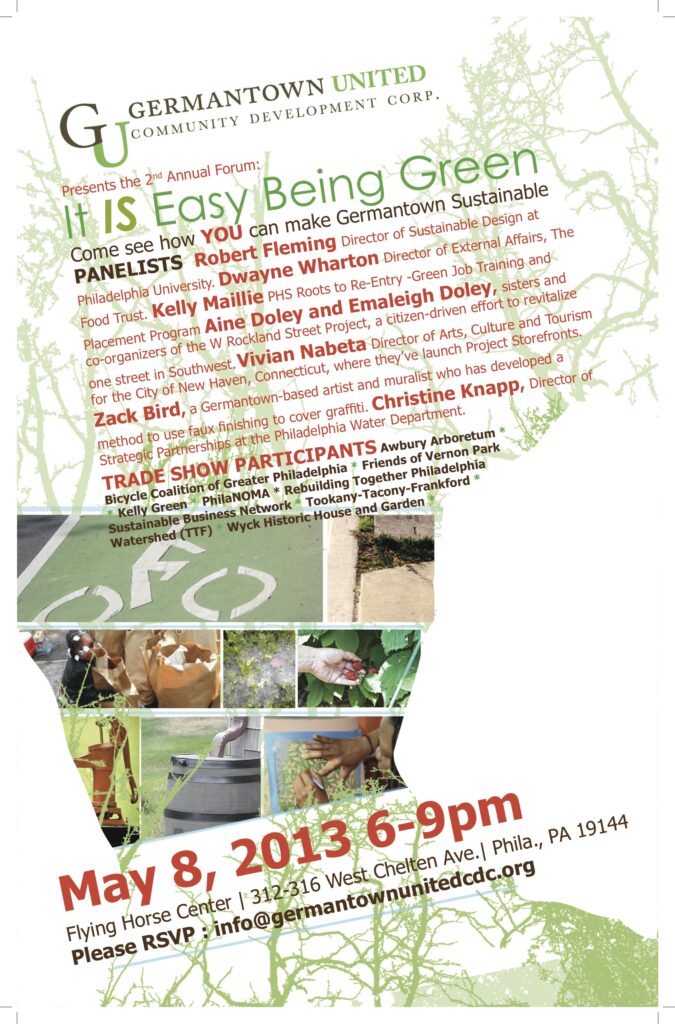
If you’re a Northwest Philly resident looking to be a bit more green in your daily life, you’re in luck. On Wednesday, May 8, the Germantown United Community Development Corporation (GUCDC) is hosting a community forum — entitled “It IS Easy Being Green” — focused on how residents and businesses can have a positive environmental and economic impact on their community.
The event is the second annual community forum sponsored by GUCDC, a relatively new organization dedicated to the well-being of Germantown.
“We planned the first forum specifically to introduce GUCDC to the community,” explains GUCDC’s Garlen Capita. “We wanted to answer the question, ‘What does a CDC do?'”
According to Capita, that event was so successful that they decided to use the same format this year while shifting the focus to sustainability. Like last year’s forum, this gathering is all about educating and disseminating information to the community.
“We want everyone who lives and works in Germantown to know that they have the power and the tools to improve the quality of life in their community,” says Capita. “Hence the title, ‘It IS Easy Being Green.'”
A diverse panel of local innovators shared details of their eco-friendly urban projects at Germantown United Community Development Corp.’s second annual community forum on Wednesday night.
The “It IS Easy Being Green” event drew a large crowd to the Flying Horse Center on Pulaski Street near Chelten Ave. in Germantown.
Before the panel discussion, attendees perused a “trade show” of tables from groups including Awbury Arboretum, the Bicycle Coalition of Greater Philadelphia, the John B. Kelly School’s “Kelly Green” grounds initiative, the Philadelphia Streets Department and the Sustainable Business Network.
Molly Finch, an educator with the Tookany-Tacony-Frankford Watershed, passed out small packets of sunflower seeds and suggested “guerrilla planting” for those without their own gardens.
“Stuff like this,” she said of the forum, “should be happening more often.”
The keynote address
GUCDC Board President Andy Trackman introduced moderator and keynote speaker Robert Fleming, associate professor of sustainable design at Philadelphia University.
Fleming, who co-founded the university’s Engineering and Design Institute and its sustainable-design Master’s degree program, led his remarks with childhood memories of Maplewood Mall and Mt. Airy.
Fleming, who also works as an LEED-accredited consultant to firms designing green buildings, showcased real-life statements he encountered from business owners in the nineties.
Vignettes included statements like “the Internet is too slow; it’ll never catch on,” and firms that insisted they didn’t need e-mail or websites because they had telephones and fax machines.
He compared those to naysayers claiming that “green” buildings will never catch on.
Greening strategies
Fleming then referenced a series of events that have left people with a fearful eye for the future, environmental or otherwise. Those included Hurricane Katrina, the Indian Ocean tsunami of 2004, the BP oil spill, the Fukushima nuclear disaster and Hurricane Sandy.
Fleming said those pressing problems leave him wanting “a more holistic view of what sustainability can be,” noting that AbrahamMaslow’s hierarchy of needs should be a model for viable greening efforts.
Specifically, he said that clean air, water and good food should underlie diverse and inclusive communities with strong economies. To top it all off, “green” efforts must be artfully crafted, to satisfy a human need for beauty, Fleming maintained.
Panelists speak
Seven panelists then shared a range of projects with the crowd.
Christine Knapp, director of strategic partnerships at the Philadelphia Water Department, spoke about the problem of urban storm-water management.
She explained the difference between “combined” sewer systems (comprising 60 percent of Philadelphia’s sewers) which cause dangerous overflow when sewage and stormwaters mingle, and “separate” ones, which help prevent flooding by giving sewage and storm-water different underground pathways.
Knapp touted solutions like rain barrels, rain gardens, roof plantings, porous pavement and increasing the number of trees planted in the city as efforts that would beautify as well as tackle sewer woes.
Obesity and re-entry
Representing the Food Trust, Dwayne Wharton pointed to a small drop in the obesity rates of city youth.
That reduction followed a range of healthy food-access initiatives like eliminating soda drinks and fryers in school cafeterias and a proliferation of city farmers’ markets that accept SNAP benefits.
The purpose of those moves was to “make the healthy choice the easy choice,” Wharton said.
Kelly Maillie, an AmeriCorps intern with the Philadelphia Horticultural Society, described a program called “Roots to Re-Entry” which trains Philadelphia Prison System inmates in food growing and landscape management.
The program, which also helps with former inmates’ job placement, was sparked by PHS’ City Harvest and currently helps to feed about 1,200 needy families per week.
Rockland Street, graffiti and storefronts
From there, Germantown sisters Aine and Emaleigh Doley spoke about their “West Rockland Street Project” which, without the help of any official structure or umbrella supporter, has revitalized a block of Southwest Germantown.
The neighborhood activists spoke about their successful efforts to remove blighted buildings, reduce dumping, build gardens, foster community engagement and even increase voter registration through a string of targeted events and initiatives.
Germantown artist and muralist Zack Bird shared his efforts to cover rampant graffiti on the Wissahickon’s stately stonework.
His before-and-after photos demonstrated that a sealed faux-finish, done with discarded house paints, can restore the appearance of stone without the costly and damaging removal work of sand-blasting.
Vivian Nabeta, who serves as New Haven, Ct. director of arts, culture and tourism, shared that city’s successful “Project Storefront” program, which livens up corridors by helping artists and entrepreneurs get into formerly vacant retail spaces.
Panelists at GUCDC’s “It IS Easy Being Green” forum spoke in Germantown about eco-friendly accomplishments. (Alaina Mabaso/for NewsWorks)
June 3, 2013 By Alaina Mabaso for NewsWorks, @AlainaMabaso Location of Germantown Town Hall, which the city shuttered in 1997 “Germantown Town Hall is so symbolic, and there’s a lot of meaning in it for the neighborhood.We want to be a part of the history, but also part of the future.” –Andy Trackman…
June 25, 2013 By Alaina Mabaso for NewsWorks, @AlainaMabaso “Everybody has a different take. People who have been here longer are jaded. I can understand why people do stop believing.” –Rocio Cabello, co-founder, iMPeRFeCT Gallery”What I’d like to…
Nothing daunts the poets in Germantown where, for a second consecutive year, one parking spot wasn’t nearly enough space for the Artists Roundtable to celebrate Park(ing) Day.
Friday’s festivities took over the sidewalk and an empty storefront’s grate as a proud crop of local writers read their work aloud despite the mid-afternoon racket of Chelten Avenue traffic.
For this year’s annual celebration of the possibilities of parking spaces — from mini-parks to the art exhibitions and beyond — the Roundtable and Germantown United Community Development Corporation (GUCDC) each claimed spots on the Chelten Avenue business corridor near Greene Street. Philadelphia University shared some space with G-Town Radio a few blocks north of that.
Roundtable festivities
An African drumming circle at the Roundtable’s space drew nearly 30 people in the early afternoon.
There, multimedia work from local artists Tieshka Smith, Susan Mangan, Terisita Stidem, Jill Saull, Gary Reed, Ife Iwoo, Adrienne Morrison and Rocio Cabello decorated every available space.
Roundtable organizer Paula Paul said she appreciated the generosity of artists who trusted their work to the public outdoor setting.
The poetry readers had a respectable audience despite many necessary pauses while SEPTA buses rumbled past.
“The keys in this pocket lead to Germantown,” poet Nzadi Keita read in a literary tribute to the neighborhood’s racially diverse residents that also touched on the region’s economic troubles. “Checks and food stamps cost a day of day of waiting.”
YahNe Ndgo, a writer and Friends of Vernon Park leader, read from her story titled “Five Minutes,” an unflinching look at the experience of abortion “at my request and his insistence.”
“Hopefully, the human element will transcend the subject matter, no matter how you relate to it,” she said, prefacing the work.
Art in the streets
The parking space itself was given over to “Broadway Boogie,” a street installation by iMPeRFeCT Gallery co-owner Renny Molenaar featuring salvaged car mufflers and tailpipes stitched tight into luxurious corduroy, lace and velvet covers.
“I’m a garbage guy,” Molenaar said when NewsWorks caught up with him at his Maplewood Mall gallery.
He said he was squatting in the South Bronx years ago when a big truck pulled up and dumped a load of “couture” fabrics right on the street.
“I thought, I can do something with this,” he said of Broadway Boogie’s inspiration.
On a whim, he began to stitch the fancy fabrics over the rusty car parts.
“It totally became sensual; they became like a body,” he said of how the metal objects were transformed by the cloth.
The one-day park
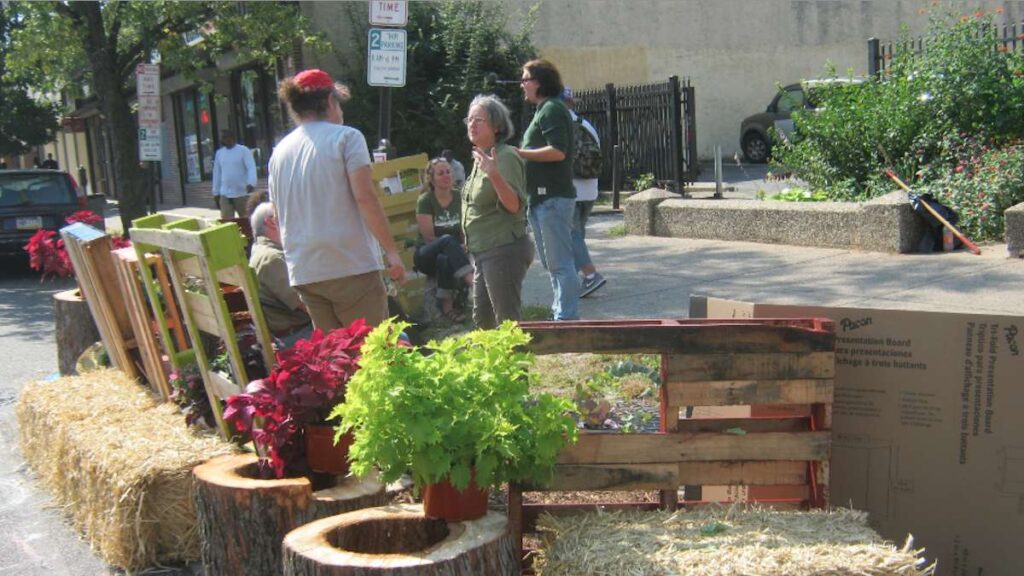
Two blocks north, Germantown Park(ing) Day organizer Megan Fitzpatrick, GUCDC board members Andy Trackman and Yvonne Haskins and others turned a parking spot into a woodsy garden.
Paved with wood chips, the spot featured potted plants sprouting from hollowed tree-trunk pieces and colorful repurposed wood pallets housing more blooms.
After an online crowd funded a shoestring budget for last June’s block party, photographer and event planner Gary Reed said that GUDCD has secured a $5,000 grant from Urban Mechanics toward the upcoming festival.
GUCDC is seeking arts-and-crafts vendors and live performers to participate in the festivities, which will also feature goodies from local restaurants.
For more information on participating as an artist, vendor or performer, e-mailAmeliaMCarter@yahoo.com. GUCDC leader Garlen Capita is also looking for more volunteers for the event; anyone interested in lending a hand should visit the organization’s website or e-mail garlen_capita@yahoo.com.
Pathmark reaches out
GUCDC’s Haskins also told passersby about an upcoming meeting regarding the future of the Germantown Pathmark grocery store.
She said she hopes the meeting — scheduled for 6:30 p.m. Oct. 2 in the Flying Horse Center’s Pegasus Room (5534 Pulaski Ave.) — will raise concerns about the appearance of the market’s parking lot and adjacent sidewalks, and the many habitual loiterers who often contribute to an unpleasant, sometimes-threatening environment.
“The fact that he asked for this meeting is exciting,” Haskins said of the store’s new manager, Jeff Kelly.
“We want to get the word out that Pathmark has a new manager who is receptive to community concerns,” she added, urging community members to attend with questions, suggestions and an appreciation for Kelly’s positive gesture.
When Germantown United Community Development Corp. launched two years ago, the organization’s officers and board members knew it would take time for residents to not only embrace, but also have faith in its mission to improve the neighborhood’s trash…
Germantown residents didn’t seem to mind giving up several parking spaces for some unorthodox temporary arts and community installations which were part of an international event which came to the neighborhood on Friday.
Germantown’s 2012 PARK(ing) Day participants said that their stations, set up in metered parking spaces commandeered worldwide for the day-long event, attracted many curious passersby.
On the 300 block of W. Chelten Ave., the Germantown United Community Development Corporation rolled several giant triangular boards into two parking spaces.
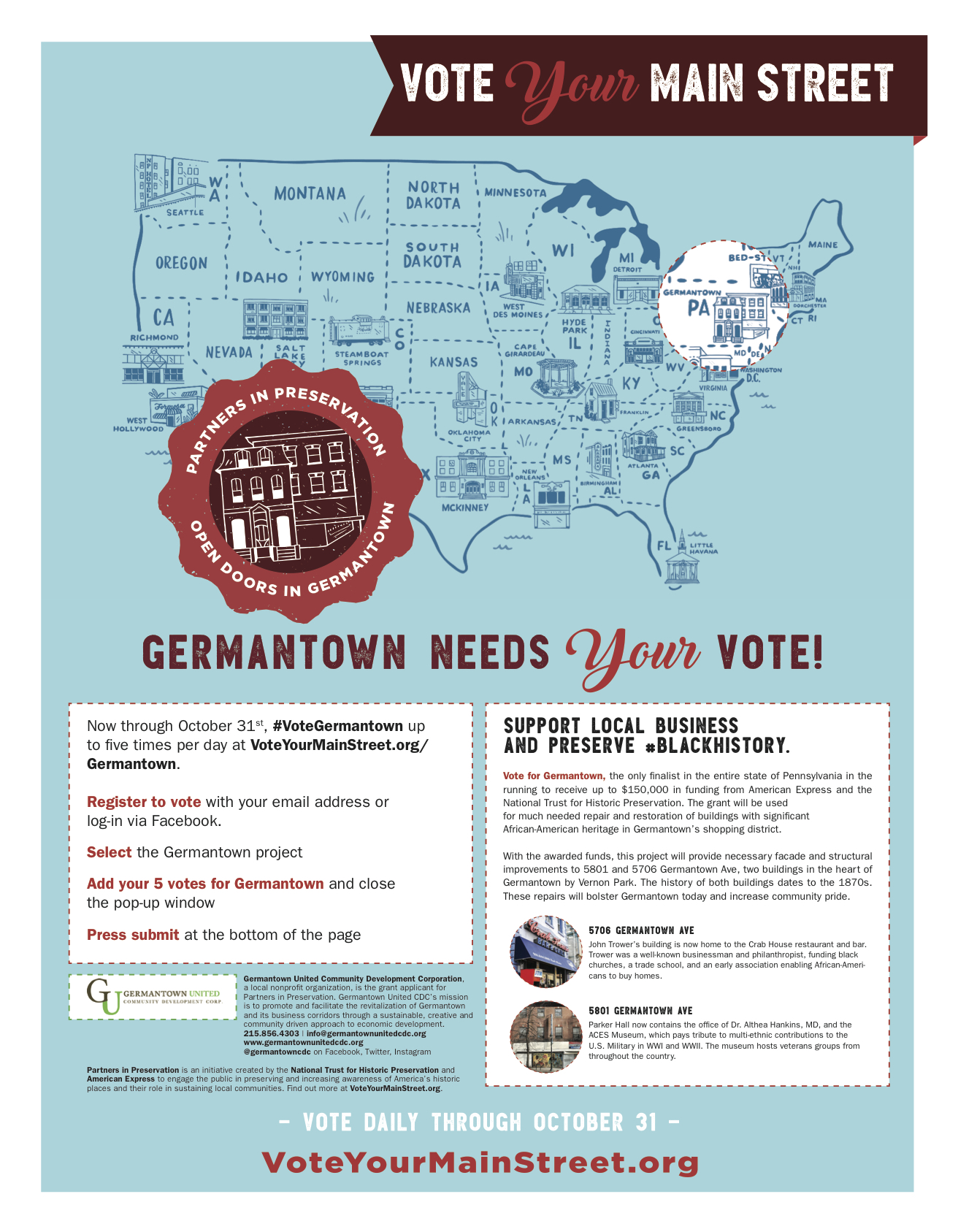
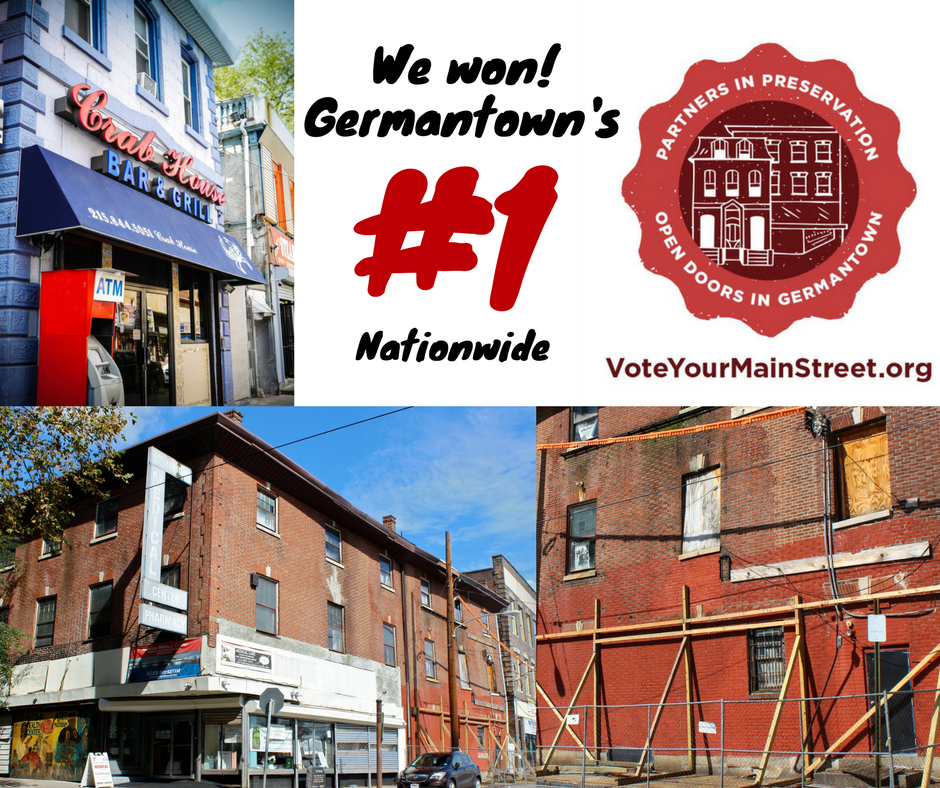
PHILADELPHIA — September 25, 2017 … As a finalist in the Partners in Preservation: Main Streets campaign, Germantown United Community Development Corporation encourages the public to visit VoteYourMainStreet.org/Germantown to help Germantown United CDC secure funding to preserve two buildings on Germantown Avenue’s business corridor: Parker Hall (5801 Germantown Ave) and John Trower’s building (5706 Germantown Ave). Germantown is the only neighborhood in Philadelphia and the entire state of Pennsylvania participating in this competition.
With the awarded funds, this project will provide necessary facade and structural improvements to these two significant 20th-century African-American historic sites. The history of both buildings dates to the 1870s. Today, Parker Hall contains the office of Dr. Althea Hankins, MD, and the ACES Museum, which pays tribute to multi-ethnic contributions to the U.S. Military in WWII. The museum hosts veterans groups from throughout the country. John Trower’s building is home to the Crab House restaurant, a popular local business. Restoring these facades will benefit these businesses, bolster the historic appeal of Germantown, and increase community pride by highlighting the contributions of African-Americans to the history and culture of this country, in an underserved African-American urban community.
Germantown United CDC’s mission is to promote and facilitate the revitalization of Germantown and it’s business corridors through a sustainable, creative and community driven approach to economic development. GUCDC believes that Germantown’s history and built environment are economic assets upon which to rebuild Germantown’s economy and create equitable economic development. After decades of decline, there are signs of improvement and vibrancy in Germantown.
Partners in Preservation is a community-based partnership, created by the National Trust for Historic Preservation and American Express, to raise awareness of the importance of preserving historic places and their role in sustaining local communities.
Partners in Preservation: Main Streets will award $2 million in grant funding from American Express to Main Street districts in need of preservation support across America. The public will determine which sites will receive funding by voting for their favorite main streets through October 31 at VoteYourMainStreet.org, the online voting portal hosted by National Geographic Travel.
Partners in Preservation: Main Streets Open House Weekend
Germantown United CDC will host a public Open House Weekend event at their new storefront office, located at 5320 Germantown Avenue, on Saturday, October 7 from 1 p.m. – 6 p.m. to highlight the importance of Main Street preservation efforts in Philadelphia. The Open House will coincide with the Revolutionary Germantown Festival, a neighborhood-wide event honoring the legacy of the Battle of Germantown. Germantown United CDC is one of 25 historic Main Street districts across the country participating in the Partners in Preservation: Main Streets Open House Weekend.
Why Main Street Matters
According to 2016 data from Main Street America, investments in Main Street districts have a significant impact on local economies – encouraging real estate development as well as the creation of new businesses and jobs. In 2016, $4.65 billion reinvested in Main Street improvement programs resulted in 8,042 building rehabilitations, 5,616 business openings, and 27,462 new jobs.
Furthermore, according to a recent study from Morning Consult of 2,201 Americans commissioned by American Express, 79 percent of Americans say that preserving Main Street is important. Additionally, 79 percent of Americans say that the idea of Main Street is what makes America beautiful. Main Street is also seen as vital in connecting Americans to their local community – 82 percent of Americans say that Main Street is important to their ability to socialize with others in a community. A similar amount, 86 percent, say that Main Street is important to the well-being and the enjoyment of a community.
For more information and to vote daily for Germantown United CDC through October 31, visit VoteYourMainStreet.org and share the love via social media using #VoteYourMainStreet and #VoteGermantown.
About Germantown United Community Development Corporation
The mission of Germantown United Community Development Corporation (GUCDC) is to promote and facilitate the revitalization of Northwest Philadelphia’s Germantown neighborhood and its business corridors through a sustainable, creative, and community-driven approach to economic development. Learn more at http://germantownunitedcdc.org.
About Partners in Preservation
Partners in Preservation is a program in which American Express, in partnership with the National Trust for Historic Preservation, awards preservation grants to historic places across the country.
Through this partnership, American Express and the National Trust for Historic Preservation seek to increase the public’s awareness of the importance of historic preservation in the United States and to preserve America’s historic and cultural places. The program also hopes to inspire long-term support from local citizens for the historic places at the heart of their communities.
About the National Trust for Historic Preservation
The National Trust for Historic Preservation, a privately funded nonprofit organization, works to save America’s historic places: www.savingplaces.org.
About Main Street America
Main Street America has been helping revitalize older and historic commercial districts for more than 35 years. Today it is a network of more than 1,600 neighborhoods and communities, rural and urban, who share both a commitment to place and to building stronger communities through preservation-based economic development. Main Street America is a program of the nonprofit National Main Street Center, Inc., a subsidiary of the National Trust for Historic Preservation.
About National Geographic Partners LLC
National Geographic Partners LLC, a joint venture between National Geographic Society and 21st Century Fox, combines National Geographic television channels with National Geographic’s media and consumer-oriented assets, including National Geographic magazines; National Geographic Studios; related digital and social media platforms; books; maps; children’s media; and ancillary activities that include travel, global experiences and events, archival sales, catalog, licensing and e-commerce businesses. A portion of the proceeds from National Geographic Partners LLC will be used to fund science, exploration, conservation and education through significant ongoing contributions to the work of the National Geographic Society. For more information, visit http://www.nationalgeographic.com/ and find us on Facebook, Twitter, Instagram, Google+, YouTube, LinkedIn and Pinterest.
GERMANTOWN UNITED COMMUNITY DEVELOPMENT CORPORATION WINS PRESERVATION GRANT FROM THE NATIONAL TRUST FOR HISTORIC PRESERVATION & AMERICAN EXPRESS
Germantown wins $160,000 in grant funding from American Express.
PHILADELPHIA — November 6, 2017 … To commemorate the 40th anniversary of the National Trust for Historic Preservation’s work to revitalize America’s Main Streets, the National Trust joined with American Express, National Geographic, and Main Street America for Partners in Preservation: Main Streets, a community-based campaign to raise awareness about the importance of preserving America’s Main Street districts.
The Open Doors in Germantown project, led by the Germantown United Community Development Corporation, finished in first place out of 25 main street districts in a nationwide popular voting competition from September 25 through October 31, and earned a $150,000 grant for historic preservation. Germantown also won an additional $10,000 grant for increasing its vote total by the highest percentage during a one-week voting challenge.
The 11 winning historic sites will receive a total of $1.5 million in grants to fund their respective preservation projects. An additional $500,000 in grants was provided to the nonprofit partners of the 25 main street communities that participated in the program at the outset of the campaign to help raise awareness about their preservation needs.
The Germantown United Community Development Corporation intends to use the funding to provide structural improvements to two buildings on Germantown Avenue’s business corridor: Parker Hall (5801 Germantown Ave) and John Trower’s building (5706 Germantown Ave), both significant 20th century African-American historic sites. Parker Hall was an integrated social hall that served as a USO-like facility during World War II for African American soldiers. The eponymous John Trower building was operated by a well-known businessman and philanthropist who was considered the wealthiest African-American in the U.S. Both buildings will continue their current uses. Today, Parker Hall contains the office of Dr. Althea Hankins, MD, and the ACES Museum, which pays tribute to multi-ethnic contributions to the U.S. Military in WWII. The museum hosts veterans groups from throughout the country. John Trower’s building is home to the Crab House restaurant, a popular local business
Restoring these facades will benefit these businesses, bolster the historic appeal of Germantown, and increase community pride by highlighting the contributions of African-Americans to the history and culture of this country, in an underserved African-American urban community.
Germantown United CDC’s mission is to promote and facilitate the revitalization of Germantown and it’s business corridors through a sustainable, creative and community driven approach to economic development. GUCDC believes that Germantown’s history and built environment are economic assets upon which to rebuild Germantown’s economy and create equitable economic development. After decades of decline, there are signs of improvement and vibrancy in Germantown.
Why Main Street Matters
According to 2016 data from Main Street America, investments in Main Street districts have a significant impact on local economies – encouraging real estate development as well as the creation of new businesses and jobs. In 2016, $4.65 billion reinvested in Main Street improvement programs resulted in 8,042 building rehabilitations, 5,616 business openings, and 27,462 new jobs.
Furthermore, according to a recent study from Morning Consult of 2,201 Americans commissioned by American Express, 79 percent of Americans say that preserving Main Street is important. Additionally, 79 percent of Americans say that the idea of Main Street is what makes America beautiful. Main Street is also seen as vital in connecting Americans to their local community – 82 percent of Americans say that Main Street is important to their ability to socialize with others in a community. A similar amount, 86 percent, say that Main Street is important to the well-being and the enjoyment of a community.
For more information and to vote daily for Germantown United CDC through October 31, visit VoteYourMainStreet.org and share the love via social media using #VoteYourMainStreet and #VoteGermantown.
###
About Germantown United Community Development Corporation
The mission of Germantown United Community Development Corporation (GUCDC) is to promote and facilitate the revitalization of Northwest Philadelphia’s Germantown neighborhood and its business corridors through a sustainable, creative, and community-driven approach to economic development. Learn more at http://germantownunitedcdc.org/.
About Partners in Preservation
Partners in Preservation is a program in which American Express, in partnership with the National Trust for Historic Preservation, awards preservation grants to historic places across the country.
Through this partnership, American Express and the National Trust for Historic Preservation seek to increase the public’s awareness of the importance of historic preservation in the United States and to preserve America’s historic and cultural places. The program also hopes to inspire long-term support from local citizens for the historic places at the heart of their communities.
About the National Trust for Historic Preservation
The National Trust for Historic Preservation, a privately funded nonprofit organization, works to save America’s historic places: www.savingplaces.org.
About Main Street America
Main Street America has been helping revitalize older and historic commercial districts for more than 35 years. Today it is a network of more than 1,600 neighborhoods and communities, rural and urban, who share both a commitment to place and to building stronger communities through preservation-based economic development. Main Street America is a program of the nonprofit National Main Street Center, Inc., a subsidiary of the National Trust for Historic Preservation.
About National Geographic Partners LLC
National Geographic Partners LLC, a joint venture between National Geographic Society and 21st Century Fox, combines National Geographic television channels with National Geographic’s media and consumer-oriented assets, including National Geographic magazines; National Geographic Studios; related digital and social media platforms; books; maps; children’s media; and ancillary activities that include travel, global experiences and events, archival sales, catalog, licensing and e-commerce businesses. A portion of the proceeds from National Geographic Partners LLC will be used to fund science, exploration, conservation and education through significant ongoing contributions to the work of the National Geographic Society. For more information, visit http://www.nationalgeographic.com/ and find us on Facebook, Twitter, Instagram, Google+, YouTube, LinkedIn and Pinterest.
The group Germantown United CDC, founded last year, is trying to change things. “Germantown is an incredible neighborhood, with endless historical and cultural assets,” says Emaleigh Doley, a Germantown resident and member of the Germantown United CDC’s steering committee. “It’s true that over the years, the neighborhood has taken a hit, to put it mildly. Now, if ever, is the time for Germantown to move forward.” Doley is encouraged by what she’s seen: a steady rise in community organizing, citizen planning and participation in development issues. “It’s development of the neighborhood’s business corridors and blighted and vacant land that will play a major role in shaping Germantown’s future,” she says, “which is why Germantown United CDC’s focus begins with sustainable commercial corridor development. We want to see business districts operating at their fullest potential, facilitating further redevelopment in Germantown and stimulating economic growth.”
Germantown is in the news! Germantown United CDC staff pick your must-reads of the month, with a focus on business, economic development, and neighborhood revitalization news.
Germantown is in the news! Germantown United CDC staff pick your must-reads of the month, with a focus on business, economic development, and neighborhood revitalization news.
Germantown is in the news! Germantown United CDC staff pick your must-reads of the month, with a focus on business, economic development, and neighborhood revitalization news.
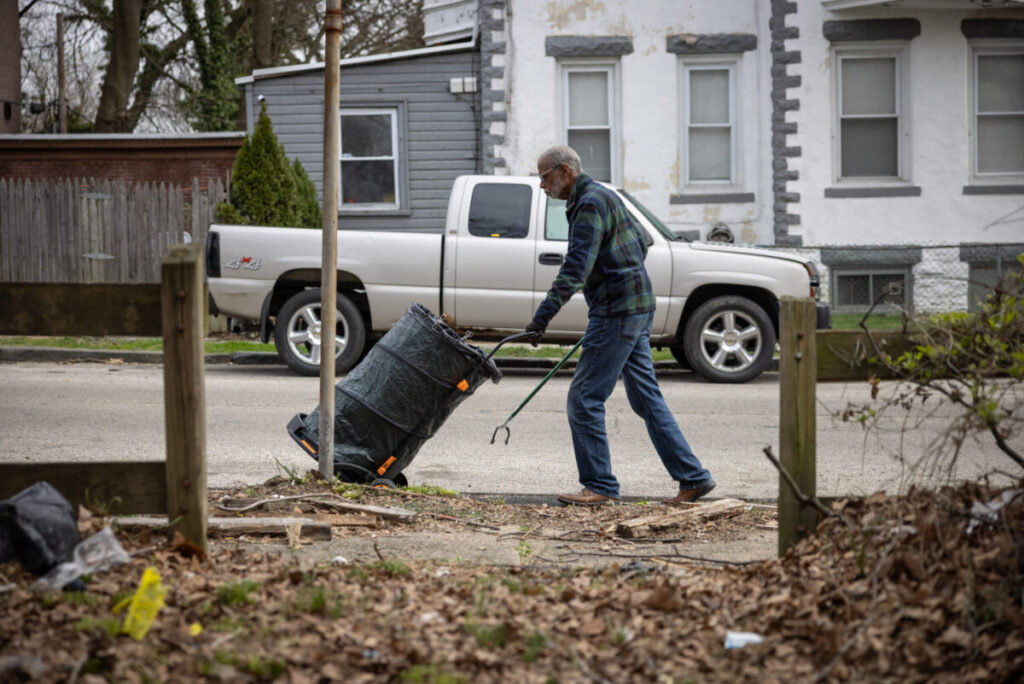


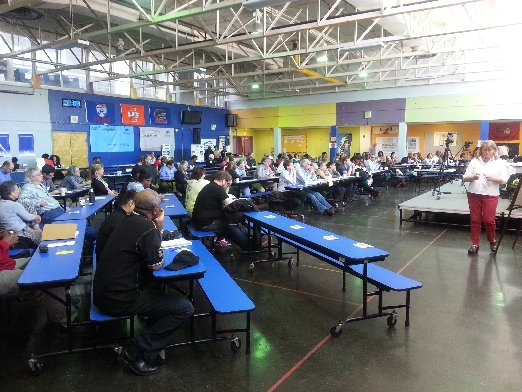



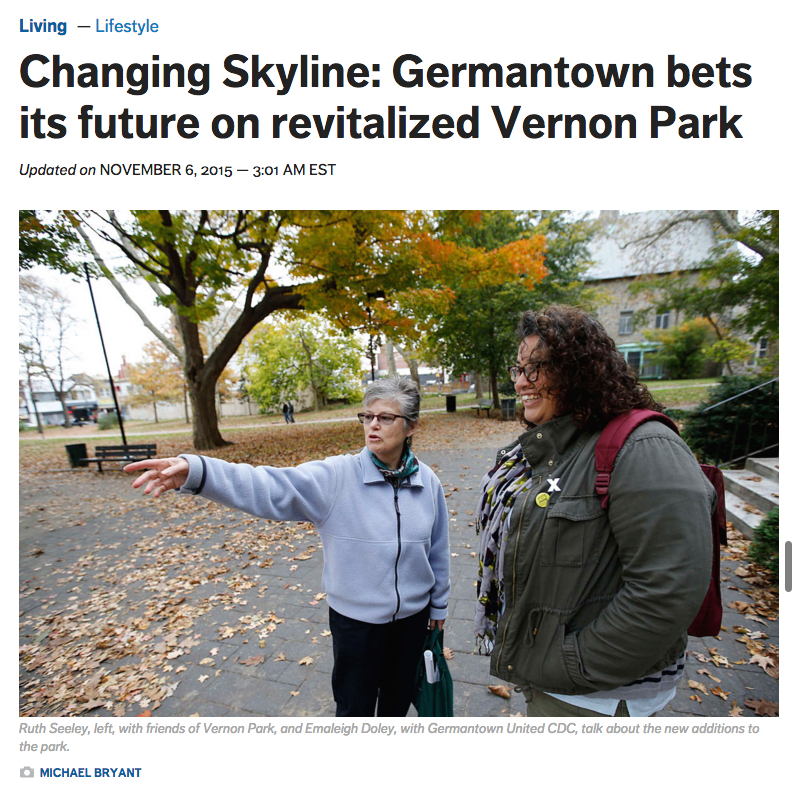

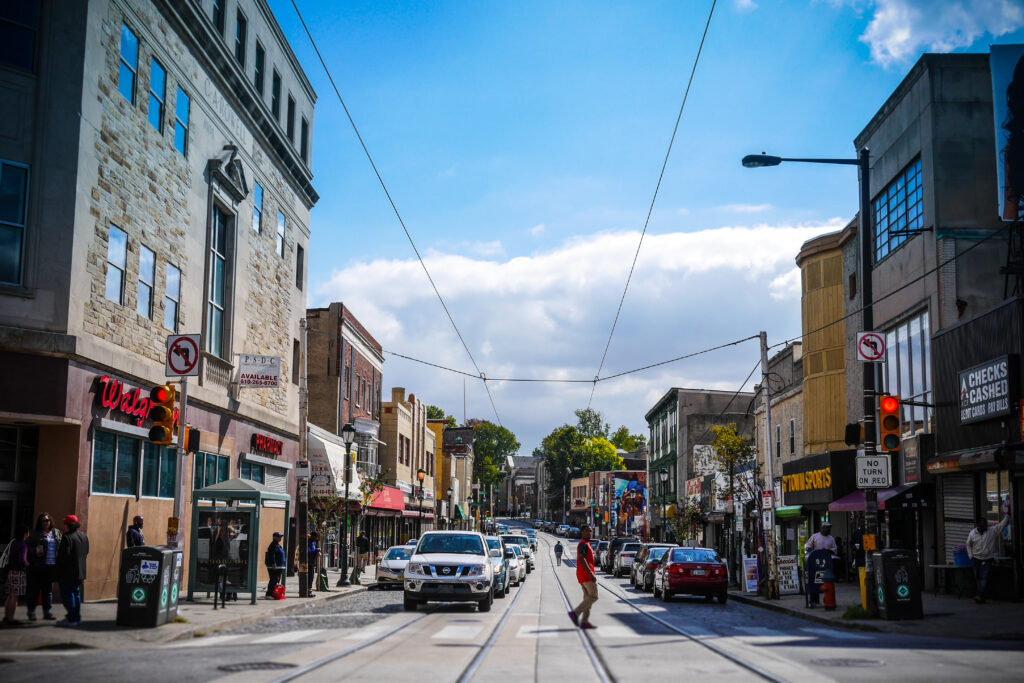
 Germantown is in the news! Germantown United CDC staff pick your must-reads of the month, with a focus on business, economic development, and neighborhood revitalization news.